It started with a YouTube workflow.
Last year I was trying to make videos faster — with ChatGPT, Midjourney and Runway prompts all planned and loaded, ready to execute in bulk. There was no good way to do it.
APIs that could do the job barely existed. And the browser-automation options that remained — Make, n8n, Zapier, UiPath — were either limited by those same APIs or a real pain to set up for reliable browser work.
APIs cover only a tiny fraction of what you do in a browser.
The well-developed automation market is built entirely on that sliver. Everything else — the actual clicking, reading, filling, checking that fills a working day — stayed out of reach.
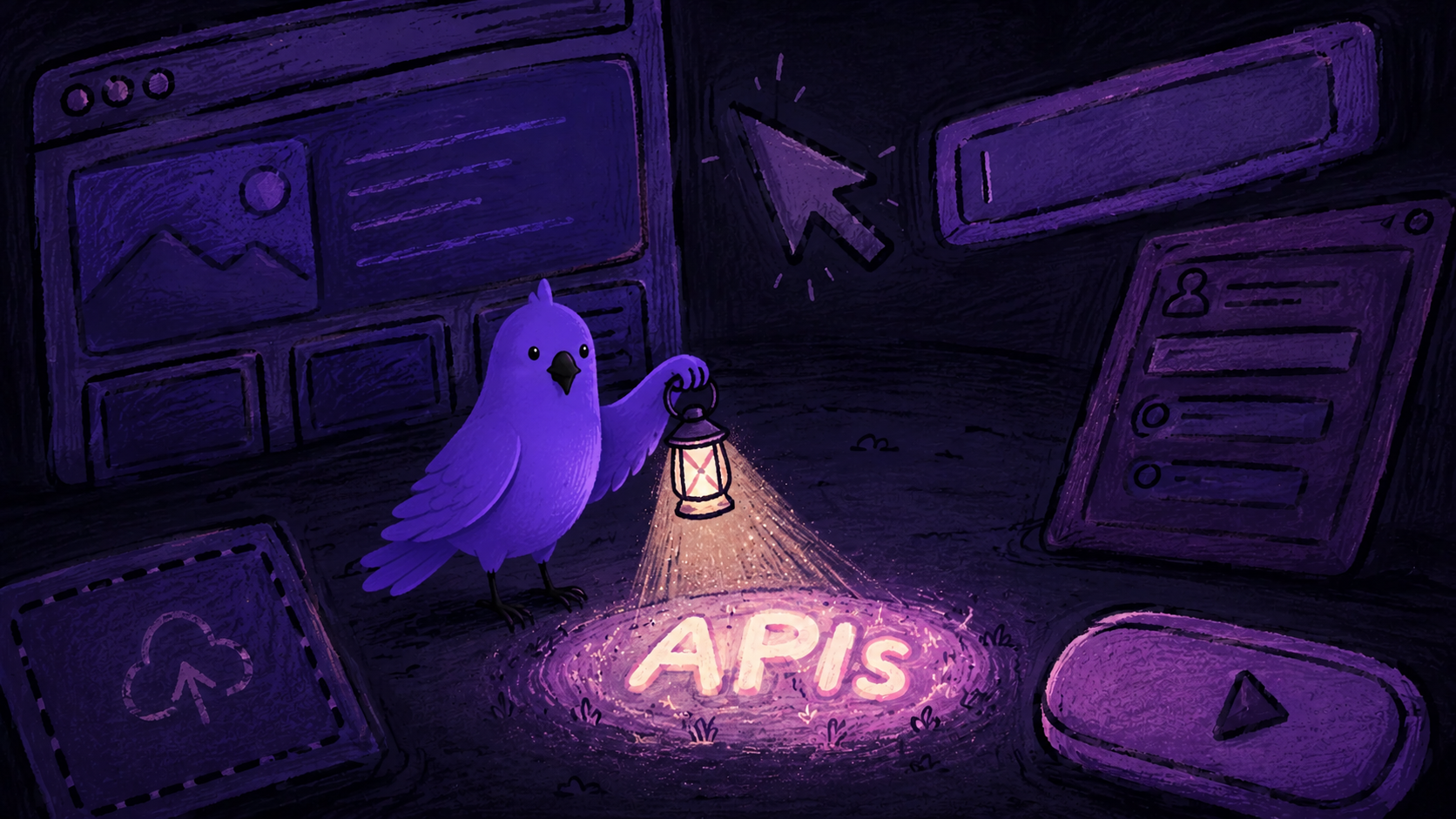
The Playwright years
I settled on Playwright — genuinely the best mechanism available: fast, reliable browser control with real depth. It worked. But it inherited every problem an end user faces when automating a browser:
The agent trap
Beyond deterministic automation sit the computer-use AI agents — with their own problems. Reliability. Cloud-only browsers on unknown servers, holding your logged-in sessions. And cost: a handful of point-and-click steps burning through tokens, with longer tasks dragging ever-more-expensive context along for the ride.
What started as one automation became an exercise in chipping away at these problems — one at a time, relentlessly, obstinately.
Something better for an end user. Something more capable, more reliable, more cost-effective. That's Prompteryx.
What it became
Visual Studio
Playwright-grade automation, visualised your way — grid canvas, ranked selectors, record & refine, run local or cloud.
ExploreAI Browser Agents
World-leading agentic browsing: markedly more economical, faster through multi-agent coordination, and every run replayable free.
ExploreBatch Prompter
The original itch, productised — hundreds of prompts across AI platforms, submitted for you from one spreadsheet.
Explore